
How to Load a Waste Container Properly: More Space, Fewer Problems
A practical guide to loading a waste container — what goes on the bottom, how to distribute weight, what to avoid, and when to check with us before loading.
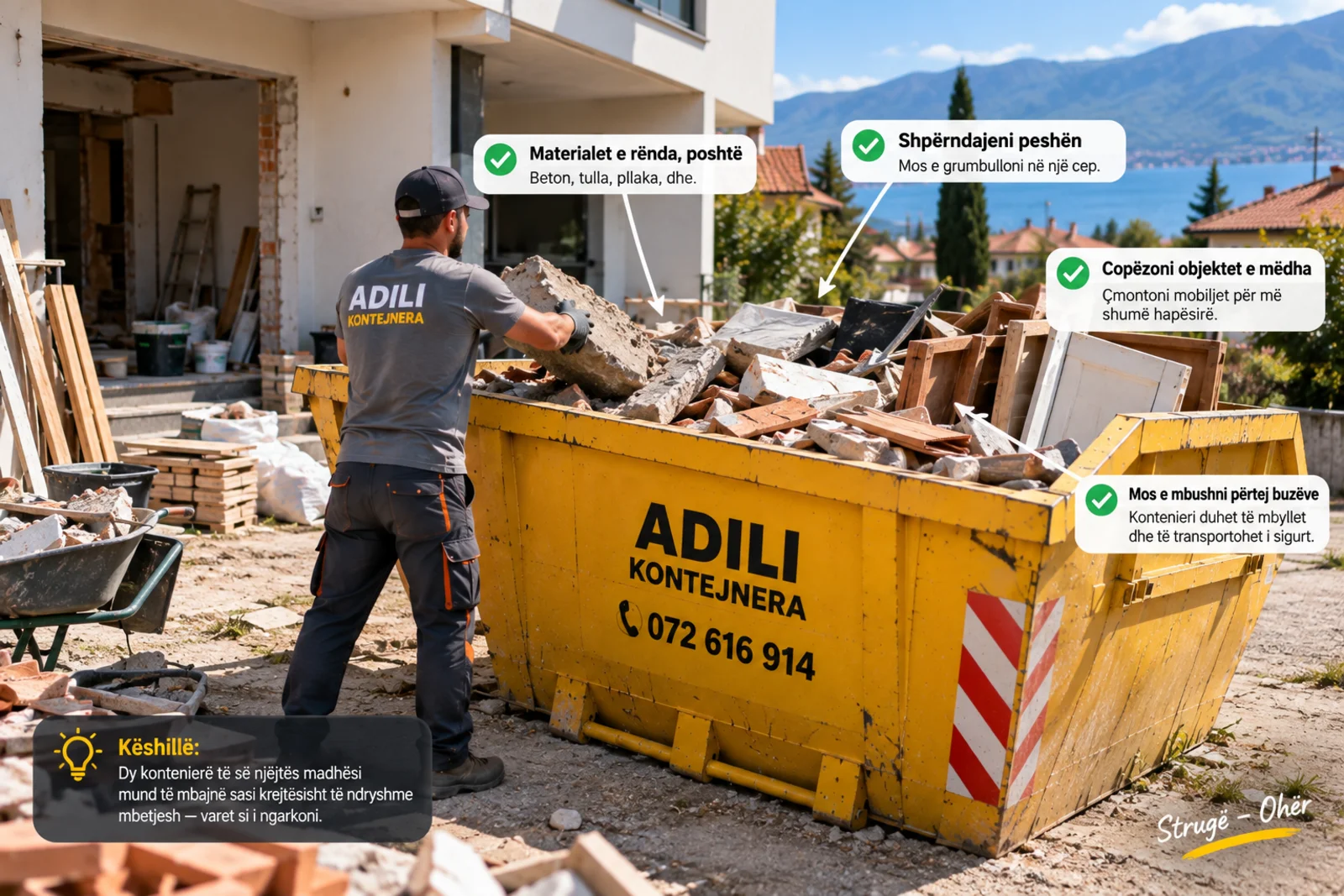
We get asked the same thing a lot: "Does it actually matter how I load the container?" The short answer is yes — quite a bit. Two containers of the same size can end up holding very different amounts of waste, simply because one was loaded carefully and the other wasn't. Here are a few simple rules we follow ourselves and recommend to customers.
Heavy, flat material goes on the bottom
Concrete, brick, tile, soil — these should go in first, at the bottom of the container. That does two things: it keeps the centre of weight low (safer for transport) and creates a firm, flat base that lighter, more irregular material can sit on top of without sinking or shifting during transport.
Distribute the weight, don't pile it in one corner
It's natural to throw things in wherever you're standing, but a large, heavy pile on just one side makes the container unbalanced. Try to spread material evenly from one side to the other — it makes lifting and transport safer, and it often opens up more usable space too.
Break down furniture and bulky items where you can
A whole wardrobe takes up far more room than its disassembled parts. Where it's safe and practical, take shelves apart, remove doors, and fold or break down bulky items before loading them. That can be the difference between one container being enough and needing an unplanned second collection.
Don't load above the sides
The container needs to be safe to close and transport. Material piled above the sides can fall off during transport and creates a hazard. If you're getting close to the limit, call us — we can work out together whether you need a bigger container or an extra collection.
Special materials — ask before you load
Paint, chemicals, batteries, motor oil, asbestos and similar materials don't go in our standard containers and need separate handling. If you're not sure whether something qualifies, call us or send a WhatsApp photo before loading it — it's much easier to sort out beforehand than after the container is already full.
How much weight can a container hold?
The exact limit depends on the container size and the type of material, and it varies case by case — so we won't quote a fixed number here. If your load includes a lot of heavy material (soil, concrete, stone), just tell us roughly how much when you contact us, and we'll advise whether you need a bigger container or a couple of collections.
Do I need to sort the waste myself before the container arrives?
Not necessarily, but if you have heavy material (soil, concrete) mixed in with light material, let us know in advance — it helps us advise on loading and the right container size.
What happens if I overfill the container?
Call us before you overfill it — we can work out together whether a bigger container or an extra collection is needed, rather than risking the safety of transport.
Can I throw away an old fridge or household appliances?
For large household appliances, contact us in advance — some types need separate handling, and we want to make sure the right container is arranged.
Need a container?
Tell us where and what needs removing — we'll get back to you quickly with pricing and timing.
Related articles
 Construction
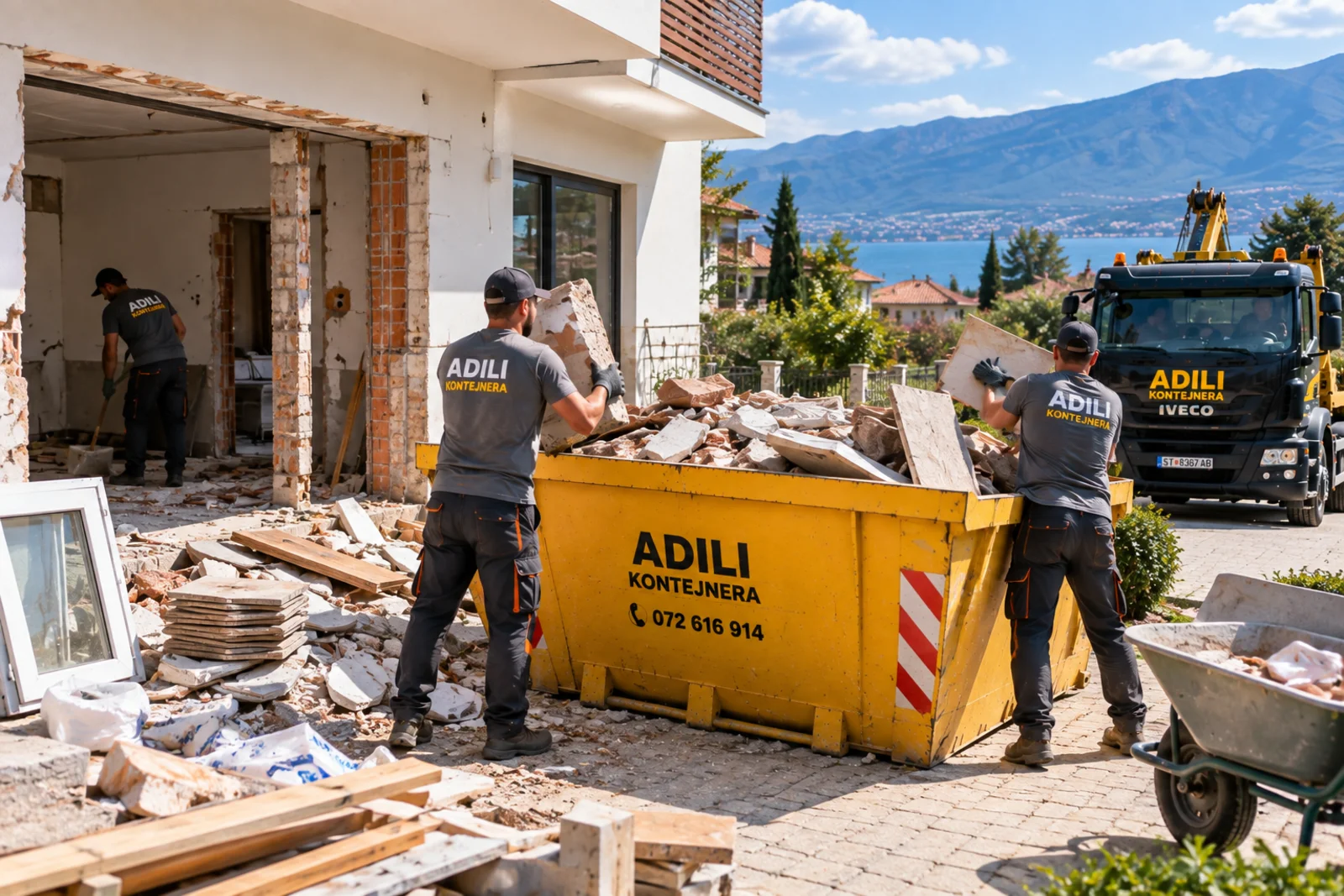
Home Renovation in Struga and Ohrid: What Can Go in the Container?
Renovations almost always turn up a mix of material you didn't fully plan for. Here's what usually goes in the container and what's worth a call first.
 Garden
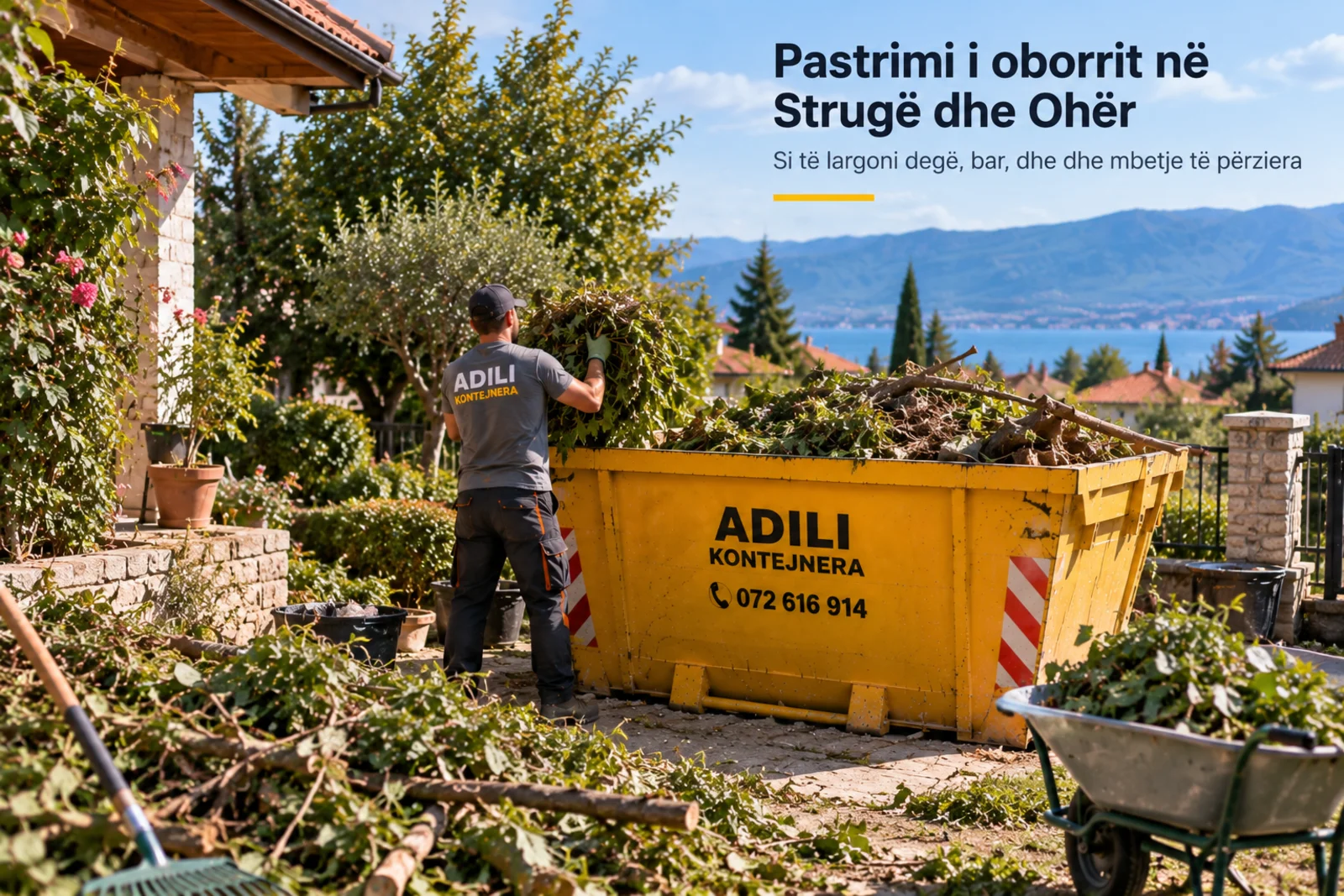
Garden Clearance in Struga and Ohrid: How to Handle Branches, Grass, Soil and Mixed Waste
Branches, cut grass, old hedge trimmings, and sometimes soil or stone too — garden clearance is often more mixed than it first looks. Here's how to organize it without wasting time.